
News
November 30, 2025
Zebrafish may teach us how to regrow our hearts, researcher at UW-Madison says
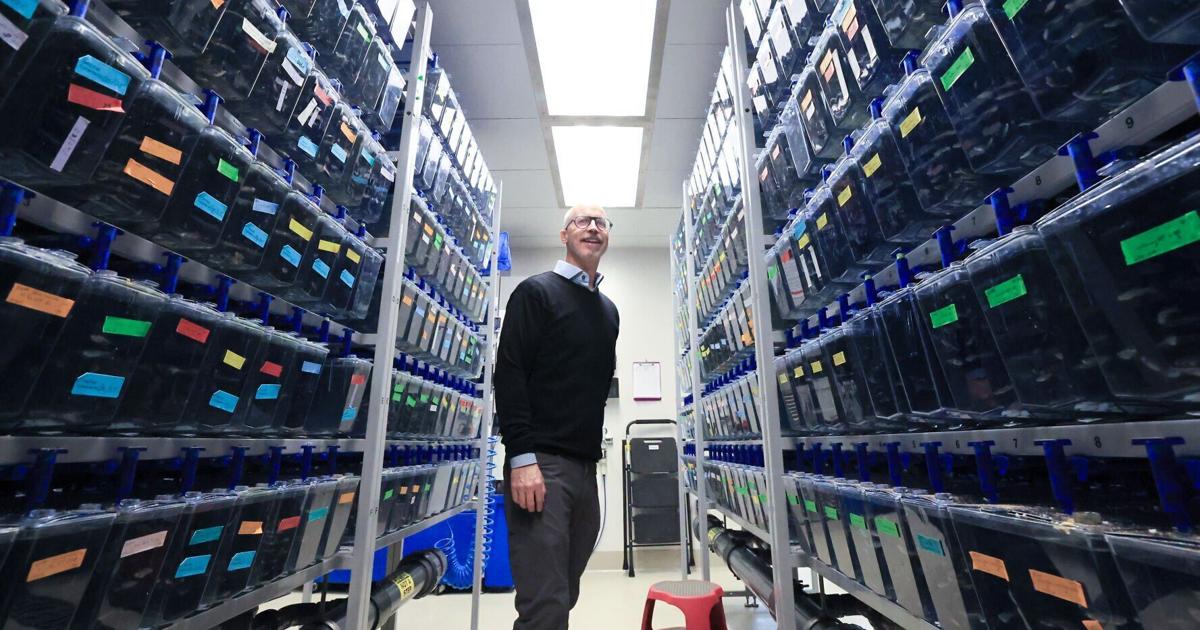
Ken Poss, who first discovered the fish could regenerate their heart tissue, moved his lab from Duke University to the Morgridge Institute at UW-Madison a year ago.
**Zebrafish May Unlock Secrets to Human Heart Regeneration, UW-Madison Researcher Believes**
Madison, WI – Hope for future treatments for heart disease may lie in the tiny, shimmering scales of the zebrafish, according to research led by Ken Poss, a leading expert in heart regeneration. Poss, who first made the groundbreaking discovery that these small fish possess the remarkable ability to regrow damaged heart tissue, has recently relocated his laboratory from Duke University to the Morgridge Institute for Research at the University of Wisconsin-Madison.
The move, which took place a year ago, signals a significant boost to UW-Madison's already strong reputation in biomedical research. Poss's arrival brings with it the potential to unlock the complex mechanisms behind the zebrafish's regenerative capabilities, offering valuable insights into how human hearts might one day be coaxed into repairing themselves after injury.
Heart disease remains a leading cause of death worldwide. Unlike zebrafish, humans have a very limited capacity to regenerate heart tissue after a heart attack or other forms of damage. Instead, scar tissue forms, weakening the heart and often leading to heart failure.
Poss and his team are meticulously studying the molecular and cellular processes that enable zebrafish to rebuild their hearts. By comparing these processes to those in mammals, including humans, researchers hope to identify key differences that explain why zebrafish can regenerate while humans cannot. Understanding these differences could pave the way for new therapies that stimulate heart regeneration in humans, potentially reversing the devastating effects of heart disease.
The Morgridge Institute, known for its collaborative and interdisciplinary approach to research, provides an ideal environment for Poss's work. The institute fosters collaboration between biologists, engineers, and other experts, allowing for a comprehensive approach to tackling the complex challenges of heart regeneration. Poss's research is expected to benefit from the cutting-edge technology and resources available at the institute, further accelerating the pace of discovery in this critical field. The ultimate goal is to translate the knowledge gained from zebrafish studies into tangible benefits for human health, offering a new era of hope for those suffering from heart disease.
Madison, WI – Hope for future treatments for heart disease may lie in the tiny, shimmering scales of the zebrafish, according to research led by Ken Poss, a leading expert in heart regeneration. Poss, who first made the groundbreaking discovery that these small fish possess the remarkable ability to regrow damaged heart tissue, has recently relocated his laboratory from Duke University to the Morgridge Institute for Research at the University of Wisconsin-Madison.
The move, which took place a year ago, signals a significant boost to UW-Madison's already strong reputation in biomedical research. Poss's arrival brings with it the potential to unlock the complex mechanisms behind the zebrafish's regenerative capabilities, offering valuable insights into how human hearts might one day be coaxed into repairing themselves after injury.
Heart disease remains a leading cause of death worldwide. Unlike zebrafish, humans have a very limited capacity to regenerate heart tissue after a heart attack or other forms of damage. Instead, scar tissue forms, weakening the heart and often leading to heart failure.
Poss and his team are meticulously studying the molecular and cellular processes that enable zebrafish to rebuild their hearts. By comparing these processes to those in mammals, including humans, researchers hope to identify key differences that explain why zebrafish can regenerate while humans cannot. Understanding these differences could pave the way for new therapies that stimulate heart regeneration in humans, potentially reversing the devastating effects of heart disease.
The Morgridge Institute, known for its collaborative and interdisciplinary approach to research, provides an ideal environment for Poss's work. The institute fosters collaboration between biologists, engineers, and other experts, allowing for a comprehensive approach to tackling the complex challenges of heart regeneration. Poss's research is expected to benefit from the cutting-edge technology and resources available at the institute, further accelerating the pace of discovery in this critical field. The ultimate goal is to translate the knowledge gained from zebrafish studies into tangible benefits for human health, offering a new era of hope for those suffering from heart disease.
Category:
Technology