
News
November 19, 2025
See the alarming extent of NIH and NSF funding cuts in 2025
In 2025, the Trump administration froze or ended about 5,300 NIH and NSF research grants totaling over $5 billion in unspent funds, a decision that reshaped many fields of science.
**Alarm Bells Ring as NIH and NSF Face Massive Funding Cuts in 2025**
The scientific community is still reeling from the significant funding cuts that hit the National Institutes of Health (NIH) and the National Science Foundation (NSF) in 2025. Under the Trump administration, a sweeping decision to freeze or terminate approximately 5,300 research grants resulted in over $5 billion in unspent funds being effectively pulled from vital scientific projects. This move sent shockwaves through various fields of science, leaving researchers scrambling and projects jeopardized.
The sheer scale of the cuts has had a profound impact. The NIH, a primary source of funding for medical research across the nation, and the NSF, which supports a broad range of scientific disciplines from mathematics and engineering to biology and social sciences, saw their ability to support crucial projects drastically reduced.
The consequences are far-reaching. Many researchers, particularly those in early stages of their careers, found themselves facing uncertain futures. Research teams were forced to downsize, experiments were halted mid-stream, and the pipeline of scientific discovery was significantly narrowed. Labs across the country had to make difficult choices about which projects to abandon and which to try to salvage.
The implications extend beyond the immediate impact on individual research projects. The cuts have raised concerns about the long-term competitiveness of the United States in the global scientific landscape. With less funding available, researchers may be less likely to pursue innovative and potentially groundbreaking ideas, potentially hindering progress in areas critical to public health, technological advancement, and economic growth.
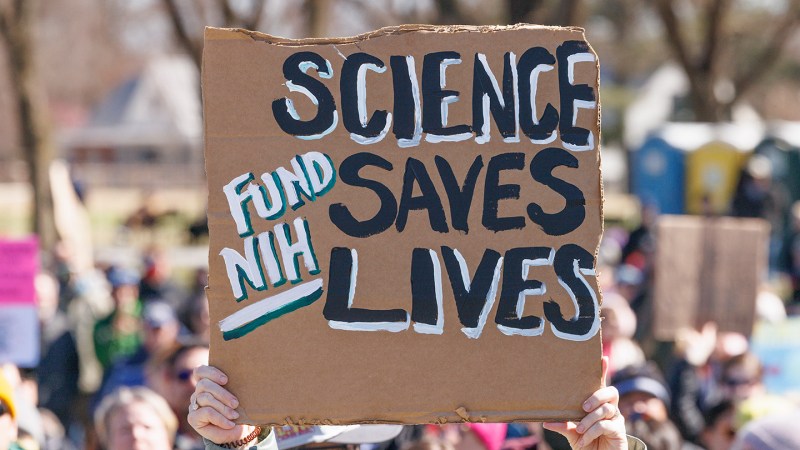
The decision to freeze or terminate these grants has sparked widespread debate within the scientific community and among policymakers. Critics argue that such drastic cuts undermine the nation's commitment to scientific advancement and could have long-lasting negative consequences for innovation and public welfare. Supporters, on the other hand, point to the need for fiscal responsibility and argue that the cuts were necessary to address budgetary concerns.
Whatever the rationale, the funding cuts of 2025 serve as a stark reminder of the vulnerability of scientific research to political and economic pressures. The scientific community continues to grapple with the aftermath, exploring strategies to mitigate the damage and advocate for sustained investment in the future of scientific discovery.
The scientific community is still reeling from the significant funding cuts that hit the National Institutes of Health (NIH) and the National Science Foundation (NSF) in 2025. Under the Trump administration, a sweeping decision to freeze or terminate approximately 5,300 research grants resulted in over $5 billion in unspent funds being effectively pulled from vital scientific projects. This move sent shockwaves through various fields of science, leaving researchers scrambling and projects jeopardized.
The sheer scale of the cuts has had a profound impact. The NIH, a primary source of funding for medical research across the nation, and the NSF, which supports a broad range of scientific disciplines from mathematics and engineering to biology and social sciences, saw their ability to support crucial projects drastically reduced.
The consequences are far-reaching. Many researchers, particularly those in early stages of their careers, found themselves facing uncertain futures. Research teams were forced to downsize, experiments were halted mid-stream, and the pipeline of scientific discovery was significantly narrowed. Labs across the country had to make difficult choices about which projects to abandon and which to try to salvage.
The implications extend beyond the immediate impact on individual research projects. The cuts have raised concerns about the long-term competitiveness of the United States in the global scientific landscape. With less funding available, researchers may be less likely to pursue innovative and potentially groundbreaking ideas, potentially hindering progress in areas critical to public health, technological advancement, and economic growth.
The decision to freeze or terminate these grants has sparked widespread debate within the scientific community and among policymakers. Critics argue that such drastic cuts undermine the nation's commitment to scientific advancement and could have long-lasting negative consequences for innovation and public welfare. Supporters, on the other hand, point to the need for fiscal responsibility and argue that the cuts were necessary to address budgetary concerns.
Whatever the rationale, the funding cuts of 2025 serve as a stark reminder of the vulnerability of scientific research to political and economic pressures. The scientific community continues to grapple with the aftermath, exploring strategies to mitigate the damage and advocate for sustained investment in the future of scientific discovery.
Category:
Technology