
News
December 02, 2025
Frontline British troops get mobile brain scans in major medical breakthrough
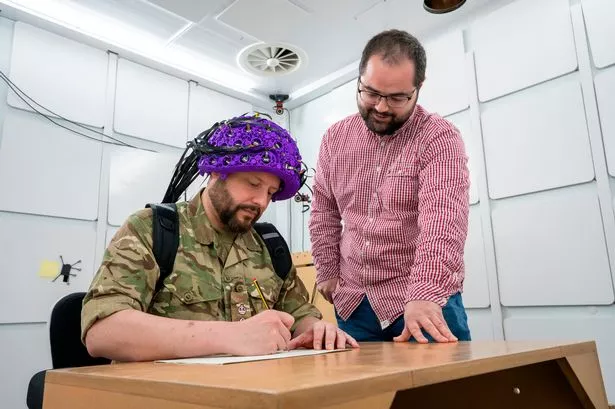
Major medical breakthrough as British troops will get mobile brain scans to measure what explosions do to the brain after years of mystery over the long-term effects of bombs on personnel
**Frontline British Troops Get Mobile Brain Scans in Major Medical Breakthrough**
In a significant advancement for military medicine, British frontline troops will soon have access to mobile brain scanning technology, offering unprecedented insight into the potential neurological impact of explosions. This initiative addresses years of uncertainty surrounding the long-term effects of bomb blasts and other concussive events on service personnel.
For years, the subtle yet potentially devastating consequences of blast exposure have been a subject of concern within the military community. While visible injuries are readily treated, the invisible damage to the brain caused by shockwaves has been more difficult to diagnose and understand. Symptoms like headaches, memory problems, and mood swings, often dismissed or attributed to other factors, could be indicative of underlying brain trauma.
Now, thanks to cutting-edge mobile scanning technology, medical professionals will be able to assess brain function in near real-time, directly on the frontlines. These portable devices will allow for rapid evaluation of troops exposed to explosions, providing a baseline assessment immediately after an incident. This early detection is crucial for understanding the immediate impact of the blast and initiating appropriate treatment strategies.
The implementation of mobile brain scans marks a paradigm shift in how the British military approaches brain injury assessment. Previously, diagnosis relied heavily on subjective reporting of symptoms, which could be unreliable due to the stressful conditions of combat or a soldier's reluctance to admit vulnerability. The objective data provided by these scans will offer a far more accurate picture of the brain's response to blast exposure.
This breakthrough is expected to have far-reaching implications. By collecting data from frontline scans, researchers will gain a deeper understanding of the mechanisms of blast-induced brain injury. This knowledge will be invaluable in developing improved protective equipment, refining treatment protocols, and ultimately, minimizing the long-term neurological consequences for those who serve. The initiative underscores the commitment of the British military to the health and well-being of its personnel, ensuring that those who face the dangers of combat receive the best possible medical care.
In a significant advancement for military medicine, British frontline troops will soon have access to mobile brain scanning technology, offering unprecedented insight into the potential neurological impact of explosions. This initiative addresses years of uncertainty surrounding the long-term effects of bomb blasts and other concussive events on service personnel.
For years, the subtle yet potentially devastating consequences of blast exposure have been a subject of concern within the military community. While visible injuries are readily treated, the invisible damage to the brain caused by shockwaves has been more difficult to diagnose and understand. Symptoms like headaches, memory problems, and mood swings, often dismissed or attributed to other factors, could be indicative of underlying brain trauma.
Now, thanks to cutting-edge mobile scanning technology, medical professionals will be able to assess brain function in near real-time, directly on the frontlines. These portable devices will allow for rapid evaluation of troops exposed to explosions, providing a baseline assessment immediately after an incident. This early detection is crucial for understanding the immediate impact of the blast and initiating appropriate treatment strategies.
The implementation of mobile brain scans marks a paradigm shift in how the British military approaches brain injury assessment. Previously, diagnosis relied heavily on subjective reporting of symptoms, which could be unreliable due to the stressful conditions of combat or a soldier's reluctance to admit vulnerability. The objective data provided by these scans will offer a far more accurate picture of the brain's response to blast exposure.
This breakthrough is expected to have far-reaching implications. By collecting data from frontline scans, researchers will gain a deeper understanding of the mechanisms of blast-induced brain injury. This knowledge will be invaluable in developing improved protective equipment, refining treatment protocols, and ultimately, minimizing the long-term neurological consequences for those who serve. The initiative underscores the commitment of the British military to the health and well-being of its personnel, ensuring that those who face the dangers of combat receive the best possible medical care.
Category:
Politics