
News
November 28, 2025
Prehistoric Humans Traded This Rare Green Gem and AI Has Identified Its Surprising Origins
Learn more about the trade of the green mineral variscite, and how experts can use AI to identify where the original trade routes began.
**Prehistoric Humans Traded This Rare Green Gem and AI Has Identified Its Surprising Origins**
For millennia, humans have been drawn to beauty, seeking out and trading precious materials. Now, a new study sheds light on the surprising trade of variscite, a vibrant green mineral, among prehistoric communities in Europe. Utilizing cutting-edge artificial intelligence, researchers are uncovering the origins of this ancient trade network, revealing unexpected connections between distant groups.
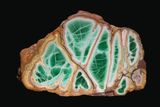
Variscite, a hydrated aluminum phosphate mineral, isn't as widely known as jade or turquoise, but its striking green hue made it a desirable material for prehistoric ornaments and jewelry. Archaeological digs across Europe have unearthed numerous variscite beads, pendants, and other decorative items, indicating its importance in ancient societies. However, pinpointing the exact sources of this variscite has been a challenge, hindering our understanding of the trade routes and social interactions that facilitated its distribution.
Traditional methods of sourcing variscite relied on visual comparison and limited chemical analysis. These approaches often proved inconclusive, as variscite deposits can exhibit subtle variations in color and composition. This is where AI steps in, offering a powerful new tool for archaeological investigation.
Researchers have developed an AI algorithm trained on a vast dataset of variscite samples from known geological sources. By analyzing the unique chemical "fingerprint" of each sample – the specific ratios of trace elements present – the AI can accurately match artifacts found at archaeological sites to their original source deposits. This method is far more precise and efficient than previous techniques, allowing for a more comprehensive understanding of variscite's journey across prehistoric landscapes.
The early results of this AI-powered analysis are already challenging existing assumptions about prehistoric trade networks. Initial findings suggest that variscite found in some regions originated from sources much further away than previously thought, implying extensive trade routes connecting communities separated by considerable distances. This reveals a more interconnected prehistoric world than previously imagined, showcasing the sophisticated social and economic systems in place thousands of years ago.
The ongoing research promises to further illuminate the lives and interactions of prehistoric Europeans. By tracing the trade routes of variscite, researchers hope to gain deeper insights into the cultural exchange, technological diffusion, and social dynamics that shaped early human societies. The use of AI in this context highlights the potential of technology to revolutionize archaeological research, unlocking new secrets about our past and providing a richer understanding of the human story.
For millennia, humans have been drawn to beauty, seeking out and trading precious materials. Now, a new study sheds light on the surprising trade of variscite, a vibrant green mineral, among prehistoric communities in Europe. Utilizing cutting-edge artificial intelligence, researchers are uncovering the origins of this ancient trade network, revealing unexpected connections between distant groups.
Variscite, a hydrated aluminum phosphate mineral, isn't as widely known as jade or turquoise, but its striking green hue made it a desirable material for prehistoric ornaments and jewelry. Archaeological digs across Europe have unearthed numerous variscite beads, pendants, and other decorative items, indicating its importance in ancient societies. However, pinpointing the exact sources of this variscite has been a challenge, hindering our understanding of the trade routes and social interactions that facilitated its distribution.
Traditional methods of sourcing variscite relied on visual comparison and limited chemical analysis. These approaches often proved inconclusive, as variscite deposits can exhibit subtle variations in color and composition. This is where AI steps in, offering a powerful new tool for archaeological investigation.
Researchers have developed an AI algorithm trained on a vast dataset of variscite samples from known geological sources. By analyzing the unique chemical "fingerprint" of each sample – the specific ratios of trace elements present – the AI can accurately match artifacts found at archaeological sites to their original source deposits. This method is far more precise and efficient than previous techniques, allowing for a more comprehensive understanding of variscite's journey across prehistoric landscapes.
The early results of this AI-powered analysis are already challenging existing assumptions about prehistoric trade networks. Initial findings suggest that variscite found in some regions originated from sources much further away than previously thought, implying extensive trade routes connecting communities separated by considerable distances. This reveals a more interconnected prehistoric world than previously imagined, showcasing the sophisticated social and economic systems in place thousands of years ago.
The ongoing research promises to further illuminate the lives and interactions of prehistoric Europeans. By tracing the trade routes of variscite, researchers hope to gain deeper insights into the cultural exchange, technological diffusion, and social dynamics that shaped early human societies. The use of AI in this context highlights the potential of technology to revolutionize archaeological research, unlocking new secrets about our past and providing a richer understanding of the human story.
Category:
Technology