
News
November 24, 2025
Saturn's rings will seem to disappear on Nov. 23: Here's how to catch the illusion
Saturn will briefly lose its bling.
**Saturn's rings will seem to disappear on Nov. 23: Here's how to catch the illusion**
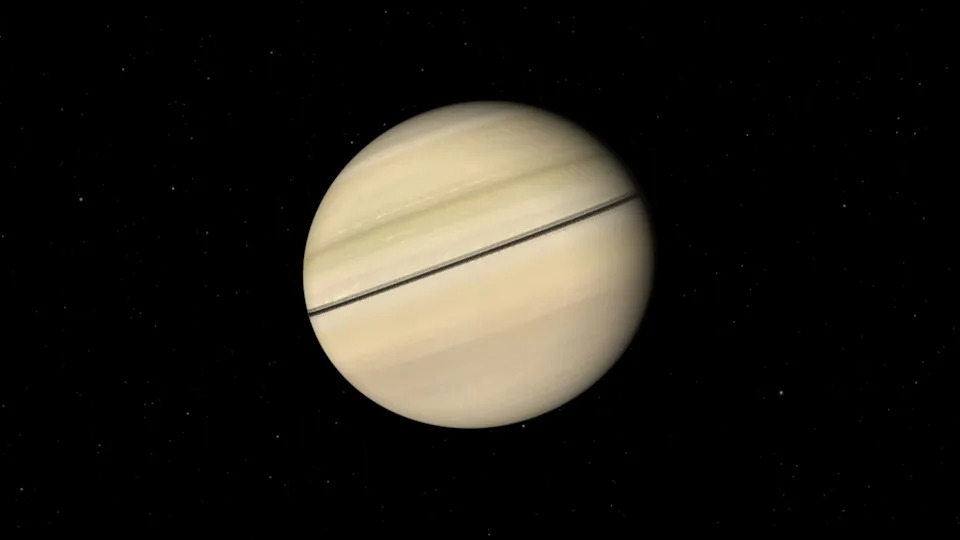
Get ready for a cosmic disappearing act! On November 23rd, Saturn, the jewel of our solar system, will appear to temporarily lose its iconic rings. This isn't magic, but a fascinating celestial alignment that creates a unique visual illusion for Earth-bound observers.
The phenomenon occurs when Earth passes through Saturn's ring plane. Because Saturn's rings are incredibly thin – only about 30 feet thick in some places, compared to their vast diameter – when we view them edge-on, they become almost invisible. Think of it like holding a piece of paper edge-on to your eye; it practically vanishes.
While the rings aren't actually gone, their immense width is compressed into a nearly imperceptible line. This makes Saturn appear less bright and arguably, less spectacular, at least for a short period. It's a rare opportunity to see the planet itself more clearly, without the dazzling distraction of its rings.
So, how can you witness this celestial event? The key is knowing where and when to look. Saturn will be visible in the constellation Aquarius, appearing as a bright, steady point of light. You'll need a clear, dark sky away from city lights for the best viewing experience. While the exact timing depends on your location, the ring plane crossing is expected to be most pronounced around the late evening hours on November 23rd.
A telescope is ideal for observing the ring plane crossing, as it will allow you to see the rings shrinking to a thin line. Even a small telescope will provide a noticeable difference. However, even with binoculars, you might be able to detect a change in Saturn's shape and brightness.
Don’t despair if you miss the exact date. The rings will appear very thin for several weeks around November 23rd, offering ample opportunities to witness the effect. This event happens roughly every 13.7 to 15.7 years, as Saturn makes its way around the sun, making it a relatively infrequent spectacle. Take advantage of this chance to observe Saturn in a slightly different light – or rather, the temporary absence of light from its magnificent rings!
Get ready for a cosmic disappearing act! On November 23rd, Saturn, the jewel of our solar system, will appear to temporarily lose its iconic rings. This isn't magic, but a fascinating celestial alignment that creates a unique visual illusion for Earth-bound observers.
The phenomenon occurs when Earth passes through Saturn's ring plane. Because Saturn's rings are incredibly thin – only about 30 feet thick in some places, compared to their vast diameter – when we view them edge-on, they become almost invisible. Think of it like holding a piece of paper edge-on to your eye; it practically vanishes.
While the rings aren't actually gone, their immense width is compressed into a nearly imperceptible line. This makes Saturn appear less bright and arguably, less spectacular, at least for a short period. It's a rare opportunity to see the planet itself more clearly, without the dazzling distraction of its rings.
So, how can you witness this celestial event? The key is knowing where and when to look. Saturn will be visible in the constellation Aquarius, appearing as a bright, steady point of light. You'll need a clear, dark sky away from city lights for the best viewing experience. While the exact timing depends on your location, the ring plane crossing is expected to be most pronounced around the late evening hours on November 23rd.
A telescope is ideal for observing the ring plane crossing, as it will allow you to see the rings shrinking to a thin line. Even a small telescope will provide a noticeable difference. However, even with binoculars, you might be able to detect a change in Saturn's shape and brightness.
Don’t despair if you miss the exact date. The rings will appear very thin for several weeks around November 23rd, offering ample opportunities to witness the effect. This event happens roughly every 13.7 to 15.7 years, as Saturn makes its way around the sun, making it a relatively infrequent spectacle. Take advantage of this chance to observe Saturn in a slightly different light – or rather, the temporary absence of light from its magnificent rings!
Category:
Technology