
News
November 19, 2025
B.C. builders turn to tech amid labour crunch
Digital modelling, autonomous welding are boosting housing delivery
**B.C. Builders Turn to Tech Amid Labour Crunch**
British Columbia's construction industry is increasingly embracing technology to combat a significant shortage of skilled workers and boost the delivery of much-needed housing. Facing challenges in finding and retaining qualified tradespeople, builders are turning to innovative solutions like digital modelling and autonomous welding to streamline processes and increase efficiency.
The labour crunch in B.C.'s construction sector has been a growing concern, impacting project timelines and raising costs. With fewer young people entering the trades and an aging workforce retiring, the pressure to find alternative methods is mounting. Technology offers a promising avenue to alleviate these pressures.
Digital modelling, also known as Building Information Modelling (BIM), is becoming increasingly prevalent. This technology allows builders to create detailed 3D models of projects before construction begins. This virtual environment enables them to identify potential design flaws, optimize material usage, and coordinate different trades more effectively. By minimizing errors and waste, BIM can significantly speed up construction timelines and reduce overall project costs.
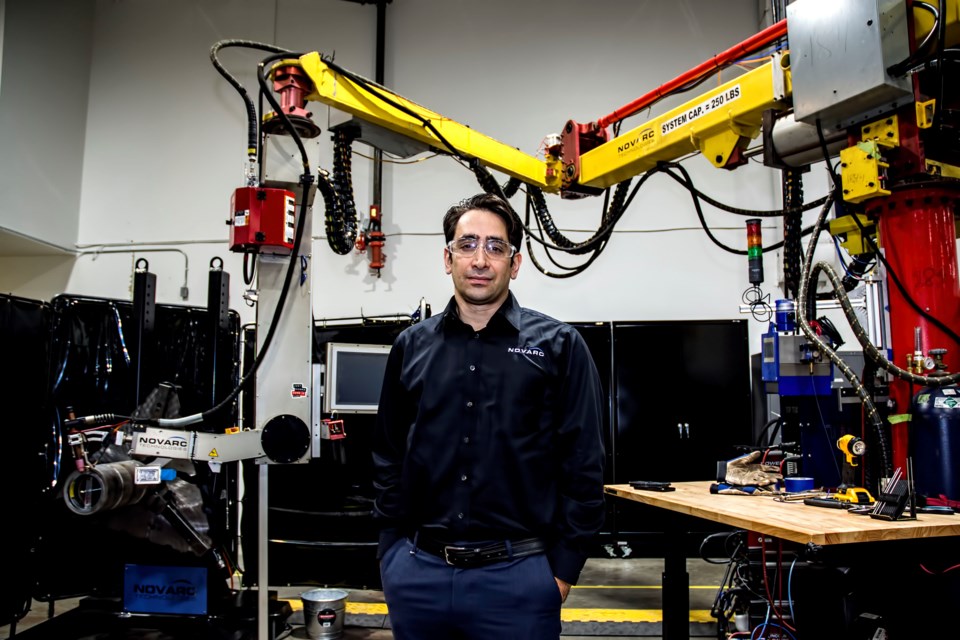
Beyond digital modelling, some companies are exploring the use of autonomous welding robots. These robots can perform repetitive welding tasks with greater precision and speed than human welders, freeing up skilled workers to focus on more complex and specialized tasks. While the initial investment in these technologies can be substantial, the long-term benefits in terms of increased productivity and reduced labour costs are proving attractive to many builders.
The adoption of these technologies is not without its challenges. Training workers to use new software and operate robotic equipment requires investment in skills development. However, industry experts believe that these investments are crucial to ensuring the long-term viability of the construction sector in B.C.
As the demand for housing continues to rise, the pressure on B.C.'s builders to find innovative solutions will only intensify. By embracing technology, the industry hopes to overcome the labour shortage and deliver much-needed housing more efficiently and affordably. The shift towards digital modelling and automation represents a significant step towards a more modern and sustainable construction industry in the province.
British Columbia's construction industry is increasingly embracing technology to combat a significant shortage of skilled workers and boost the delivery of much-needed housing. Facing challenges in finding and retaining qualified tradespeople, builders are turning to innovative solutions like digital modelling and autonomous welding to streamline processes and increase efficiency.
The labour crunch in B.C.'s construction sector has been a growing concern, impacting project timelines and raising costs. With fewer young people entering the trades and an aging workforce retiring, the pressure to find alternative methods is mounting. Technology offers a promising avenue to alleviate these pressures.
Digital modelling, also known as Building Information Modelling (BIM), is becoming increasingly prevalent. This technology allows builders to create detailed 3D models of projects before construction begins. This virtual environment enables them to identify potential design flaws, optimize material usage, and coordinate different trades more effectively. By minimizing errors and waste, BIM can significantly speed up construction timelines and reduce overall project costs.
Beyond digital modelling, some companies are exploring the use of autonomous welding robots. These robots can perform repetitive welding tasks with greater precision and speed than human welders, freeing up skilled workers to focus on more complex and specialized tasks. While the initial investment in these technologies can be substantial, the long-term benefits in terms of increased productivity and reduced labour costs are proving attractive to many builders.
The adoption of these technologies is not without its challenges. Training workers to use new software and operate robotic equipment requires investment in skills development. However, industry experts believe that these investments are crucial to ensuring the long-term viability of the construction sector in B.C.
As the demand for housing continues to rise, the pressure on B.C.'s builders to find innovative solutions will only intensify. By embracing technology, the industry hopes to overcome the labour shortage and deliver much-needed housing more efficiently and affordably. The shift towards digital modelling and automation represents a significant step towards a more modern and sustainable construction industry in the province.
Category:
World