
News
November 28, 2025
Key Driver of Extreme Winds on Venus Identified
A new study suggests that a once-daily atmospheric tidal cycle may be a bigger driver of rapid Venusian winds than previously thought.
**Key Driver of Extreme Winds on Venus Identified**
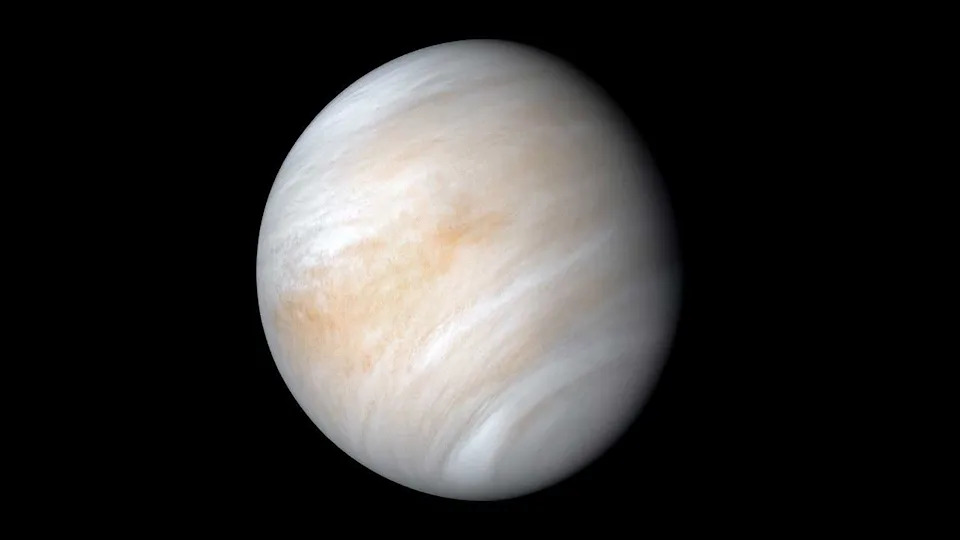
Venus, often called Earth's "sister planet" due to its similar size and composition, boasts a dramatically different atmosphere. One of its most striking features is its incredibly fast winds, which whip around the planet at speeds much faster than Venus itself rotates. For decades, scientists have been trying to understand the driving forces behind these super-rotating winds, and a new study offers a compelling piece of the puzzle.
The research suggests that a once-daily atmospheric tidal cycle plays a more significant role in powering these winds than previously appreciated. Atmospheric tides are global-scale oscillations in atmospheric pressure and temperature, similar to ocean tides but caused by the sun's heating of the atmosphere rather than the moon's gravity. While the influence of solar heating on Venus's atmosphere has long been recognized, this study highlights the specific importance of the daily tidal cycle.
The team of researchers focused on how the sun's energy interacts with the Venusian atmosphere, creating these daily tides. These tides, driven by the sun's consistent energy input, generate pressure differences that, in turn, accelerate the winds. The study implies that the consistent and predictable nature of this daily cycle contributes significantly to the sustained high-speed winds observed on Venus.
Understanding the mechanisms behind Venus's super-rotation is crucial not only for comprehending the planet's current climate, but also for gaining insights into how planetary atmospheres evolve over time. By identifying the importance of the daily atmospheric tide, this research provides a valuable new perspective on the complex dynamics shaping Venus's unique environment.
Further research will be needed to fully understand the interplay between atmospheric tides and other potential drivers of Venus's winds. However, this study represents a significant step forward in unraveling the mysteries of this intriguing and often overlooked planetary neighbor. The findings could also help scientists better understand atmospheric dynamics on other planets, including our own, and improve climate models for both Earth and other worlds.
Venus, often called Earth's "sister planet" due to its similar size and composition, boasts a dramatically different atmosphere. One of its most striking features is its incredibly fast winds, which whip around the planet at speeds much faster than Venus itself rotates. For decades, scientists have been trying to understand the driving forces behind these super-rotating winds, and a new study offers a compelling piece of the puzzle.
The research suggests that a once-daily atmospheric tidal cycle plays a more significant role in powering these winds than previously appreciated. Atmospheric tides are global-scale oscillations in atmospheric pressure and temperature, similar to ocean tides but caused by the sun's heating of the atmosphere rather than the moon's gravity. While the influence of solar heating on Venus's atmosphere has long been recognized, this study highlights the specific importance of the daily tidal cycle.
The team of researchers focused on how the sun's energy interacts with the Venusian atmosphere, creating these daily tides. These tides, driven by the sun's consistent energy input, generate pressure differences that, in turn, accelerate the winds. The study implies that the consistent and predictable nature of this daily cycle contributes significantly to the sustained high-speed winds observed on Venus.
Understanding the mechanisms behind Venus's super-rotation is crucial not only for comprehending the planet's current climate, but also for gaining insights into how planetary atmospheres evolve over time. By identifying the importance of the daily atmospheric tide, this research provides a valuable new perspective on the complex dynamics shaping Venus's unique environment.
Further research will be needed to fully understand the interplay between atmospheric tides and other potential drivers of Venus's winds. However, this study represents a significant step forward in unraveling the mysteries of this intriguing and often overlooked planetary neighbor. The findings could also help scientists better understand atmospheric dynamics on other planets, including our own, and improve climate models for both Earth and other worlds.
Category:
Technology