
News
November 30, 2025
Here comes the sun: LANL designed instruments aboard NASA craft to study heliosphere, solar wind
The Northern New Mexico lab designed two of 10 instruments aboard NASA's Interstellar Mapping and Acceleration Probe.
**Here comes the sun: LANL designed instruments aboard NASA craft to study heliosphere, solar wind**
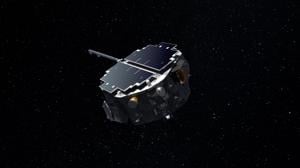
Los Alamos National Laboratory (LANL) is playing a crucial role in unraveling the mysteries of our solar system with the development of key instruments for NASA's upcoming Interstellar Mapping and Acceleration Probe (IMAP). The northern New Mexico lab has designed two of the ten sophisticated instruments aboard the spacecraft, poised to provide unprecedented insights into the heliosphere and the solar wind.
The heliosphere, essentially a giant bubble created by the sun's continuous outflow of charged particles known as the solar wind, protects our solar system from harmful galactic cosmic rays. Understanding its dynamics and interactions with interstellar space is vital for space weather forecasting and safeguarding astronauts and spacecraft.
The IMAP mission, scheduled for launch in 2025, will orbit a point a million miles away from Earth in the direction of the sun. From this vantage point, it will continuously monitor and map the heliosphere's boundaries, providing a comprehensive view of the complex processes occurring at the edge of our solar system.
The LANL-designed instruments are specifically tailored to measure the energetic neutral atoms (ENAs) that are produced when solar wind particles interact with interstellar gas. By carefully analyzing these ENAs, scientists can remotely image the structure of the heliosphere and learn more about the acceleration of particles to high energies. This information is crucial to understanding the fundamental physics driving the heliosphere and its interaction with the interstellar medium.
The involvement of LANL in the IMAP mission highlights the lab's expertise in space science and its commitment to advancing our understanding of the universe. The data collected by the LANL instruments will not only enhance our knowledge of the heliosphere but also contribute to our ability to predict and mitigate the effects of space weather, ensuring the safety of future space exploration missions. This collaboration between LANL and NASA underscores the importance of partnerships in scientific discovery and the pursuit of knowledge beyond our planet. The results from IMAP are expected to revolutionize our understanding of the sun's influence on the surrounding space environment for years to come.
Los Alamos National Laboratory (LANL) is playing a crucial role in unraveling the mysteries of our solar system with the development of key instruments for NASA's upcoming Interstellar Mapping and Acceleration Probe (IMAP). The northern New Mexico lab has designed two of the ten sophisticated instruments aboard the spacecraft, poised to provide unprecedented insights into the heliosphere and the solar wind.
The heliosphere, essentially a giant bubble created by the sun's continuous outflow of charged particles known as the solar wind, protects our solar system from harmful galactic cosmic rays. Understanding its dynamics and interactions with interstellar space is vital for space weather forecasting and safeguarding astronauts and spacecraft.
The IMAP mission, scheduled for launch in 2025, will orbit a point a million miles away from Earth in the direction of the sun. From this vantage point, it will continuously monitor and map the heliosphere's boundaries, providing a comprehensive view of the complex processes occurring at the edge of our solar system.
The LANL-designed instruments are specifically tailored to measure the energetic neutral atoms (ENAs) that are produced when solar wind particles interact with interstellar gas. By carefully analyzing these ENAs, scientists can remotely image the structure of the heliosphere and learn more about the acceleration of particles to high energies. This information is crucial to understanding the fundamental physics driving the heliosphere and its interaction with the interstellar medium.
The involvement of LANL in the IMAP mission highlights the lab's expertise in space science and its commitment to advancing our understanding of the universe. The data collected by the LANL instruments will not only enhance our knowledge of the heliosphere but also contribute to our ability to predict and mitigate the effects of space weather, ensuring the safety of future space exploration missions. This collaboration between LANL and NASA underscores the importance of partnerships in scientific discovery and the pursuit of knowledge beyond our planet. The results from IMAP are expected to revolutionize our understanding of the sun's influence on the surrounding space environment for years to come.
Category:
Technology